
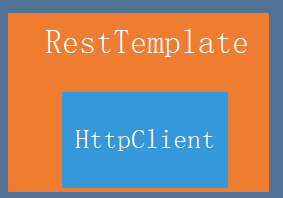
RestTemplate是Spring提供的一个访问Http服务的客户端类。从名称上来看,该类更多是针对RESTFUL风格API设计的。RestTemplate的底层实现仍然是HttpClient或HttpUrlConnection或OkHttp(三者可选),只是对它进行了封装,从而降低编码复杂度。
## 一、RestTemplate常用方法
RestTemplate提供的常用方法是以Http协议中的6个动词开头的:
| HTTP Method | 常用方法 | 描述 |
| --- | --- | --- |
| GET | getForObject | 发起GET请求响应对象 |
| GET | getForEntity | 发起GET请求响应结果、包含响应对象、请求头、状态码等HTTP协议详细内容 |
| POST | postForObject | 发起POST请求响应对象 |
| POST | postForEntity | 发起POST请求响应结果、包含响应对象、请求头、状态码等HTTP协议详细内容 |
| DELETE | delete | 发起HTTP的DELETE方法请求 |
| PUT | put | 发起HTTP的PUT方法请求 |
这些方法的名称清楚地表明它们调用的是哪个HTTP方法,而名称中包含的第二部分表示返回的内容。
## 二、远程服务调用
要使用RestTemplate ,必须是Spring环境,首先将它初始化为一个Bean。只做一次即可。
~~~
@Configuration
public class ContextConfig {
@Bean
public RestTemplate restTemplate(){
return new RestTemplate();
}
}
~~~
下面的Junit代码实现了使用RestTemplate发送Post请求,到“/sms/send”短信发送服务。从代码的实现复杂度上已经比使用HttpClient要简单了许多。
~~~
@ExtendWith(SpringExtension.class) //Junit5
@SpringBootTest
public class RestTemplateTest {
@Resource
private RestTemplate restTemplate;
@Test
void httpPostForObject() throws Exception {
//发送远程http请求的url
String url = "http://localhost:8402/sms/send";
//发送到远程服务的参数
MultiValueMap<String, Object> params = new LinkedMultiValueMap<>();
params.add("phoneNo", "13214409773");
params.add("content", "HttpClient测试远程服务调用");
//通过RestTemplate对象发送post请求
AjaxResponse ajaxResponse = restTemplate.postForObject(url, params, AjaxResponse.class);
System.out.println(ajaxResponse);
}
}
~~~
Junit测试控制台打印(参考aservice-sms的“/sms/send”的服务定义):

如果我们想获取请求结果中的更多Http协议信息,可以使用postForEntity方法。如下:
~~~
@Test
void httpPostForEntity() throws Exception {
//发送远程http请求的url
String url = "http://localhost:8402/sms/send";
//发送到远程服务的参数
MultiValueMap<String, Object> params = new LinkedMultiValueMap<>();
params.add("phoneNo", "13214409773");
params.add("content", "HttpClient测试远程服务调用");
//通过RestTemplate对象发送post请求
ResponseEntity<AjaxResponse> entitys = restTemplate.postForEntity(url, params, AjaxResponse.class);
System.out.println(entitys.getBody());
//查看响应的状态码
System.out.println(entitys.getStatusCodeValue());
//查看响应头
HttpHeaders headMap = entitys.getHeaders();
for(Map.Entry<String, List<String>> m : headMap.entrySet()){
System.out.println(m.getKey() + ": " + m.getValue());
}
}
~~~
Junit测试控制台打印(参考aservice-sms的“/sms/send”的服务定义):

## 三、RestTemplate底层实现的切换
RestTemplate底层实现最常用的有以下三种:
* SimpleClientHttpRequestFactory(封装URLConnection,JDK自带,默认实现)
* HttpComponentsClientHttpRequestFactory(封装第三方类库HttpClient)
* OkHttp3ClientHttpRequestFactory(封装封装第三方类库OKHttp)
通常情况下,网上的资料认为OKHttp是目前执行效率最高的HTTP类库(笔者没实际测试过)。也就是下文代码中的最后一种。
~~~
@Configuration
public class ContextConfig {
//默认实现,实际与urlConnection是一样的底层实现
@Bean
public RestTemplate restTemplate(){
RestTemplate restTemplate = new RestTemplate();
return restTemplate;
}
//默认实现
@Bean("urlConnection")
public RestTemplate urlConnectionRestTemplate(){
RestTemplate restTemplate = new RestTemplate(new SimpleClientHttpRequestFactory());
return restTemplate;
}
@Bean("httpClient")
public RestTemplate httpClientRestTemplate(){
RestTemplate restTemplate = new RestTemplate(new HttpComponentsClientHttpRequestFactory());
return restTemplate;
}
@Bean("OKHttp3")
public RestTemplate OKHttp3RestTemplate(){
RestTemplate restTemplate = new RestTemplate(new OkHttp3ClientHttpRequestFactory());
return restTemplate;
}
}
~~~
在实际的应用中,只需要选择上面的代码中的其中一种RestTemplate Bean即可。
- 文档简介
- 模块与代码分支说明
- dongbb-cloud项目核心架构
- 微服务架构进化论
- SpringBoot与Cloud选型兼容
- Spring Cloud组件的选型
- 单体应用拆分微服务
- 单体应用与微服务对比
- 微服务设计拆分原则
- 新建父工程及子模块框架
- 通用微服务初始化模块构建
- 持久层模块单独拆分
- 拆分rbac权限管理微服务
- Hello-microservice
- 构建eureka服务注册中心
- 向服务注册中心注册服务
- 第一个微服务调用
- 远程服务调用
- HttpClient远程服务调用
- RestTemplate远程服务调用
- RestTemplate多实例负载均衡
- Ribbon调用流程源码解析
- Ribbon负载均衡策略源码解析
- Ribbon重试机制与饥饿加载
- Ribbon自定义负载均衡策略
- Feign与OpenFeign
- Feign设计原理源码解析
- Feign请求压缩与超时等配置
- 服务注册与发现
- 白话服务注册与发现
- DiscoveryClient服务发现
- Eureka集群环境构建(linux)
- Eureka集群多网卡环境ip设置
- Eureka集群服务注册与安全认证
- Eureka自我保护与健康检查
- 主流服务注册中心对比(含nacos)
- zookeeper概念及功能简介
- zookeeper-linux集群安装
- zookeeper服务注册与发现
- consul概念及功能介绍
- consul-linux集群安装
- consul服务注册与发现
- 通用-auatator导致401问题
- 分布式配置中心-apollo
- 服务配置中心概念及使用场景
- apollo概念功能简介
- apollo架构详解
- apollo分布式部署之Portal
- apollo分布式部署之环境区分
- apollo项目权限管理实战
- apollo-java客户端基础
- apollo与SpringCloud服务集成
- apollo实例配置热更新
- apollo命名空间与集群
- apollo灰度发布(日志热更新为例)
- SpringCloudConfig配置中心
- config-git配置文件仓库
- config配置中心搭建与测试
- config客户端基础
- config配置安全认证
- config客户端配置刷新
- config配置中心高可用
- BUS消息总线
- bus消息总线简介
- docker安装rabbitMQ
- 基于rabbitMQ的消息总线
- bus实现批量配置刷新
- alibaba-nacos
- nacos介绍与单机部署
- nacos集群部署方式(linux)
- nacos服务注册与发现
- nacos服务注册中心详解
- nacos客户端配置加载
- nacos客户端配置刷新
- nacos服务配置隔离与共享
- nacos配置Beta发布
- 服务熔断降级hystrix
- 服务降级&熔断&限流
- Hystrix集成并实现服务熔断
- Jemter模拟触发服务熔断
- Hystrix服务降级fallback
- Hystrix结合Feign服务降级
- 远程服务调用异常传递的问题
- Hystrix-Feign异常拦截与处理
- Hystrix-DashBoard单服务监控
- Hystrix-dashboard集群监控
- 分布式系统流量卫兵sentinel
- sentinel简介与安装
- 客户端集成与实时监控
- 实战流控规则-QPS限流
- 实战流控规则-线程数限流
- 实战流控规则-关联限流
- 实战流控规则-链路限流
- 实战流控效果-WarmUp
- 实战流控效果-匀速排队
- BlockException处理
- 实战熔断降级-RT
- 实战熔断降级-异常数与比例
- DegradeException处理
- 注解与异常的归纳总结
- Feign降级及异常传递拦截
- 动态规则nacos集中存储
- 热点参数限流
- 系统自适应限流
- 微服务网关-GateWay
- 还有必要学习Zuul么?
- 简介与非阻塞异步IO模型
- GateWay概念与流程
- 新建一个GateWay项目
- 通用Predicate的使用
- 自定义PredicateFactory
- 编码方式构建静态路由
- Filter过滤器介绍与使用
- 自定义过滤器Filter
- 网关请求转发负载均衡
- 结合nacos实现动态路由配置
- 整合Sentinel实现资源限流
- 跨域访问配置
- 网关层面全局异常处理
- 微服务网关安全认证-JWT篇
- Gateway-JWT认证鉴权流程
- 登录认证JWT令牌颁发
- 全局过滤器实现JWT鉴权
- 微服务自身内部的权限管理